Imagine riding through the dramatic landscapes of Nubra Valley, crossing rugged Himalayan roads and then arriving at a small village surrounded by apricot orchards, green fields and snow-covered mountains. Welcome to Turtuk, one of the most culturally fascinating and geographically unique villages in Ladakh.
Located close to the Line of Control in the Nubra region, Turtuk feels very different from the more familiar destinations of Leh, Pangong Lake and Khardung La. Its Balti heritage, traditional stone-and-wood houses, narrow village lanes, apricot orchards and spectacular mountain scenery make it one of the most rewarding places to add to a Ladakh itinerary.
For travellers planning Leh Ladakh Bike Tour, Turtuk offers an opportunity to experience another side of Ladakh-one that combines adventure, history, culture and rural life.
If you are searching for a reliable Leh Ladakh Tour Operator or comparing Leh Ladakh Packages, adding Turtuk to your itinerary can turn a conventional Nubra Valley trip into a much more immersive Himalayan experience.
Quick Facts About Turtuk Village
| Detail | Information |
|---|---|
| Location | Nubra Valley, Leh district, Ladakh |
| Region | Baltistan / Nubra |
| Altitude | Approximately 2,900–3,000 metres |
| Distance from Leh | Approximately 200+ km by road, depending on route |
| Nearest Major Town | Diskit |
| Known For | Balti culture, apricots, mountain scenery |
| Best Season | May to October |
| Main Access | Leh–Khardung La–Nubra route |
| Nearby Attractions | Diskit, Hunder, Panamik, Thang, Yarab Tso |
| Ideal Stay | 1–2 nights |
| Travel Style | Village tourism, culture, photography, motorcycle trips |
Important: Distances, road conditions, permits and travel times can vary depending on the route and prevailing conditions. Always check current local travel advisories before starting a journey into remote areas.
Turtuk Village Location
Turtuk is situated in Nubra Valley in northern Ladakh, close to the India-Pakistan Line of Control.
It lies in the Shyok Valley, along the road that continues beyond the popular Nubra destinations of Diskit and Hunder towards the northern reaches of the region.
Its location is one of the reasons Turtuk is so fascinating.
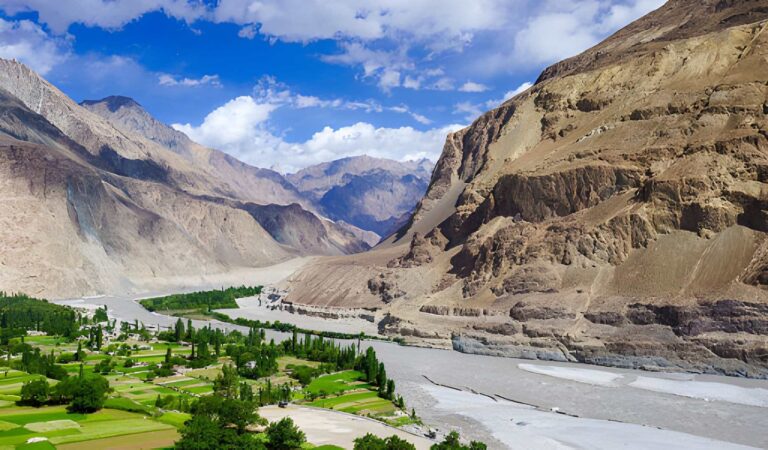
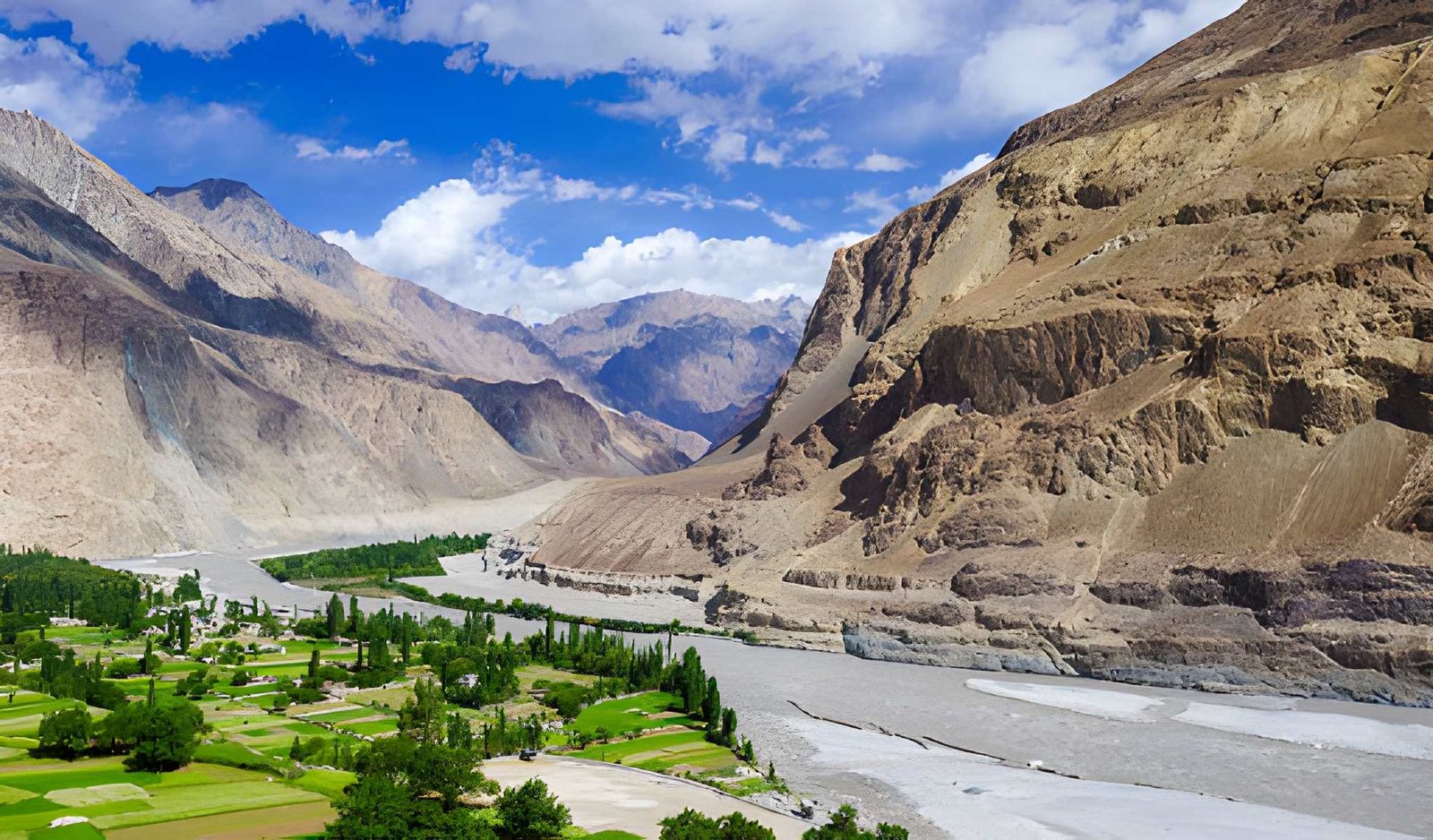
Unlike the barren landscapes often associated with Ladakh, the village itself can appear surprisingly green during the warmer months. Streams, cultivated fields and apricot orchards contrast dramatically with the surrounding brown and grey mountains.
Turtuk’s proximity to the border also means that travellers need to respect local regulations and restrictions. Some areas beyond Turtuk are not open for unrestricted tourism.
Best Time to Visit Turtuk Village
The best time to visit Turtuk is generally from May to October, when road access is more favourable and the village is at its most vibrant.
However, each period offers a different experience.
May to June
This is an excellent time to enjoy pleasant daytime conditions and fresh greenery.
The landscape begins to come alive after winter, while tourist crowds are usually lower than during peak summer.
July to August
These months generally offer lush greenery, functioning guesthouses and good road-trip conditions, although weather can occasionally affect mountain roads.
This is also a beautiful period for photography.
September to October
September can be particularly attractive for travellers who prefer fewer crowds.
The landscape begins transitioning towards autumn, while the weather can remain suitable for exploring.
October can become significantly colder, especially at night.
Winter: November to April
Winter is a completely different experience.
Temperatures can fall considerably, snowfall can affect accessibility and many tourism facilities may operate on a limited basis.
For a first visit, the warmer season is generally more practical.
How to Reach Turtuk Village
For most travellers, the journey to Turtuk is part of the adventure.
From Leh by Road
The most popular route is:
Leh → Khardung La → Khardung Village → Diskit → Hunder → Thoise/Turtuk region → Turtuk
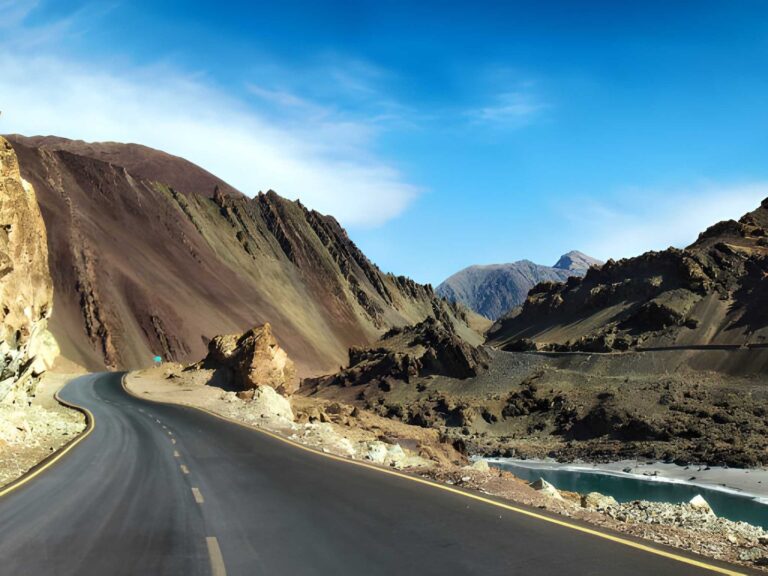
The journey involves mountain roads, high-altitude terrain and long driving hours.
Because of the distance and altitude changes, Turtuk is usually visited as part of a Nubra Valley itinerary rather than as a quick day trip from Leh.
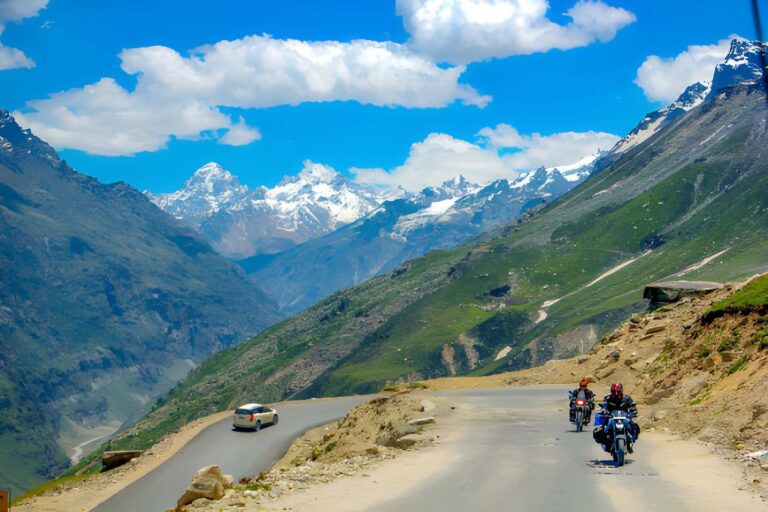
By Motorcycle
Turtuk is an excellent destination for motorcycle enthusiasts.
Travellers booking Ladakh Bike Trip Packages via Turtuk can include this culturally rich village after exploring Diskit and Hunder.
A typical motorcycle route could look like:
Leh → Khardung La → Diskit → Hunder → Turtuk
The journey combines some of Ladakh’s iconic mountain roads with the cultural experience of reaching a remote Balti village.
By Car
A private car or SUV is another comfortable option, particularly for families and travellers who do not want to ride a motorcycle.
A local Leh Ladakh Tour Operator can arrange vehicles, accommodation and route planning according to the group’s requirements.
Permits and Restrictions
Because Turtuk is located in a strategically sensitive part of Ladakh, travellers should carry valid identification and follow current permit requirements and local instructions.
Do not assume that every road beyond Turtuk is open to tourists.
Always confirm the latest access regulations before travelling.
Why Is Turtuk Village Special in Ladakh?
Turtuk is not simply another stop in Nubra Valley.
Its significance comes from a combination of geography, culture, history and agriculture.
Here are some of the reasons Turtuk stands apart.
1. One of India’s Northernmost Tourist Villages
Turtuk is widely promoted as one of the northernmost inhabited and tourist-accessible villages in India.
Its location makes it particularly significant for travellers interested in India’s remote Himalayan frontier.
Beyond Turtuk lie areas associated with the Siachen region and the sensitive India-Pakistan border.
The sense of remoteness is part of the attraction.
You are travelling far beyond the usual Ladakh tourist circuit and entering a region where geography and geopolitics have shaped everyday life.
2. Unique Balti Culture and Heritage
Perhaps the biggest reason to visit Turtuk is its culture.
Turtuk is culturally different from many other parts of Ladakh because its residents have strong Balti cultural and historical roots.
The village’s architecture, food, language, traditions and lifestyle reflect this heritage.
As you walk through the village, you may notice:
- Traditional stone houses
- Wooden structures
- Narrow lanes
- Irrigation channels
- Small agricultural fields
- Traditional mills
- Local mosques
- Historic village structures
The cultural contrast is striking.
Much of Ladakh has strong Tibetan Buddhist cultural influences, whereas Turtuk has a predominantly Muslim Balti cultural identity.
This makes the village particularly interesting for travellers who want to understand the diversity of Ladakh beyond monasteries and mountain passes.
3. Stunning Natural Beauty
Turtuk’s landscape is one of its greatest attractions.
The village sits between dramatic mountains and the Shyok River landscape.
During summer, the contrast becomes spectacular:
Green orchards + golden fields + blue sky + rugged mountains + snow-covered peaks
This combination makes Turtuk one of the most photogenic villages in Nubra Valley.
Unlike the stark high-altitude desert landscapes found elsewhere in Ladakh, Turtuk has a softer and greener appearance.
Spend some time walking rather than simply stopping for photographs.
You will notice irrigation channels, agricultural fields, local homes and villagers going about their daily routines.
4. One of Ladakh’s Important Apricot-Producing Villages
Turtuk is particularly famous for its apricots.
The village’s relatively lower altitude and favourable microclimate allow fruit cultivation that is difficult in many other parts of high-altitude Ladakh.
During the growing season, apricot trees add colour to the village landscape.
Local apricot products may include:
- Fresh apricots
- Dried apricots
- Apricot jam
- Apricot-based products
- Locally prepared beverages and foods
If you visit during the fruit season, trying locally grown apricots is an essential part of the experience.
You can also support the local economy by purchasing products directly from village households or legitimate local sellers.
5. Gateway to the Siachen Glacier Region
Turtuk’s location is closely associated with the Siachen Glacier region, one of the world’s highest and most challenging military environments.
However, travellers should understand the distinction between being near the region and having access to it.
The Siachen area is strategically sensitive, and civilian movement is restricted.
Turtuk itself provides an opportunity to understand the geography of this frontier region without entering restricted military zones.
Always obey signs, security instructions and restrictions.
Do not photograph military installations, personnel or sensitive infrastructure.
Things to Do in Turtuk Village
Turtuk is not a destination where you need a long list of commercial attractions.
The village itself is the attraction.
1. Walk Through the Old Village
Take time to explore the narrow lanes.
Look at the traditional architecture, wooden balconies, stone walls and irrigation channels.
A slow village walk is one of the best ways to experience Turtuk.
2. Visit the Balti Heritage Areas
Explore local heritage sites and traditional village structures where permitted.
A local guide can explain the cultural significance of buildings and customs much better than simply walking around independently.
3. Explore Apricot Orchards
If you visit during the right season, the orchards are among the most beautiful parts of Turtuk.
Ask before entering private agricultural land.
4. Try Local Food
Turtuk offers an opportunity to taste Balti-influenced cuisine that differs from the typical food served in Leh’s tourist restaurants.
5. Photograph the Landscape
Turtuk is ideal for landscape and documentary photography.
The best subjects include:
- Village lanes
- Apricot trees
- Mountain backgrounds
- Traditional homes
- Agricultural fields
- Local architecture
- Shyok Valley landscapes
Always ask permission before photographing people, particularly in private or intimate settings.
6. Experience Village Life
Instead of rushing through Turtuk in a few hours, stay overnight if your itinerary allows.
A homestay can provide a much deeper understanding of the local lifestyle.
7. Explore Nearby Nubra
Turtuk can easily be combined with:
- Diskit
- Hunder
- Panamik
- Sumur
- Yarab Tso
This makes the village an excellent addition to a broader Nubra Valley itinerary.
History of Turtuk Village
Turtuk’s history is inseparable from the history of Baltistan.
The village historically formed part of the broader Balti cultural region.
The political landscape changed dramatically following the 1947 India-Pakistan conflict.
The region around Turtuk became part of the area administered by India, while other parts of historical Baltistan remained under Pakistani administration.
For local families, these geopolitical changes were deeply significant because communities that had historically shared cultural and family connections suddenly found themselves separated by a new political boundary.
Turtuk remained relatively isolated for decades.
The village was opened to tourists in 2010, after which its cultural uniqueness and scenic beauty gradually brought it onto the Ladakh tourism map.
That relatively recent opening is one reason Turtuk still retains a stronger sense of authenticity compared with some of Ladakh’s more heavily visited destinations.
Best Places to Visit Near Turtuk Village
Turtuk is best experienced as part of a Nubra Valley road trip.
Diskit Monastery
Located in Diskit, this famous monastery is one of the most important Buddhist landmarks in Nubra Valley.
Its enormous Maitreya Buddha statue overlooking the valley is one of the region’s most recognisable sights.
Hunder Sand Dunes
Hunder is famous for its dramatic cold-desert landscape and the famous Bactrian double-humped camels.
The contrast between desert-like dunes and snow-covered mountains makes it one of Nubra’s most photographed locations.
Sumur
Sumur offers a quieter side of Nubra Valley and is known for its village landscapes and monastery.
Panamik
Panamik is famous for its natural hot springs and is located deeper inside Nubra Valley.
Access and local restrictions can vary, so check current conditions before travelling.
Yarab Tso
Often called the “Hidden Lake of Nubra,” Yarab Tso is a small high-altitude lake near Sumur.
Visitors should maintain silence and respect local religious customs around the lake.
Thang Village
Thang is associated with the northernmost accessible areas of India, but access restrictions can apply.
Do not attempt to travel beyond permitted areas without official permission.
Accommodation Options in Turtuk Village
Turtuk has accommodation options ranging from simple homestays to guesthouses and small hotels.
Homestays
For travellers looking for an authentic experience, a homestay is arguably the best option.
Benefits include:
- Local food
- Direct interaction with residents
- Understanding Balti culture
- Supporting local families
- A more personal travel experience
Guesthouses
Local guesthouses offer a balance between comfort and village atmosphere.
Facilities can vary considerably, so confirm:
- Attached bathroom availability
- Hot water
- Heating
- Meals
- Electricity
- Mobile connectivity
- Parking
Hotels and Camps
Depending on the season, additional accommodation may be available in and around the wider Nubra Valley.
For Leh Ladakh Packages, accommodation is usually easier to arrange in larger Nubra settlements such as Diskit and Hunder.
If staying specifically in Turtuk, booking ahead during the peak travel season is recommended.
What to Eat in Turtuk
One of the best ways to understand Turtuk is through its food.
Because of its Balti heritage, local cuisine can differ from what travellers commonly encounter elsewhere in Ladakh.
Depending on the homestay or restaurant, you may find:
Balti-Style Local Dishes
Local meals may include traditional preparations using wheat, vegetables, meat and locally available ingredients.
Apricot Products
Try:
- Fresh apricots
- Dried apricots
- Apricot jam
- Local apricot products
Momos and Thukpa
Popular across Ladakh, these dishes are also commonly available in tourist areas.
Butter Tea
If offered by your host, trying traditional tea can be an interesting cultural experience.
Local Bread
Traditional breads served with tea or meals are another simple but enjoyable part of a homestay experience.
Tip: Food availability can be limited in remote villages. If you have dietary restrictions, inform your accommodation provider in advance.
Best Turtuk Village Itinerary
If you are incorporating Turtuk into a motorcycle or car journey, 2 days in the Nubra region can provide a good introduction.
Day 1: Leh to Nubra Valley
Route:
Leh → Khardung La → Khardung Village → Diskit → Hunder
Spend the day exploring Nubra.
Visit:
- Khardung La
- Diskit Monastery
- Hunder Sand Dunes
- Bactrian camel area
Stay overnight in Hunder or Diskit.
Day 2: Hunder to Turtuk
After breakfast:
Hunder → Shyok Valley → Turtuk
Spend the day exploring:
- Traditional village lanes
- Balti homes
- Apricot orchards
- Local heritage
- Village viewpoints
- Local food
Stay overnight in Turtuk if accommodation is available.
Day 3: Turtuk to Leh
After breakfast, begin the return journey.
Depending on your itinerary, you can either return towards Leh or continue exploring permitted parts of Nubra Valley before returning.
Extended Option
For a longer Leh Ladakh Packages itinerary, Turtuk can be combined with:
Leh → Nubra → Turtuk → Hunder → Pangong → Leh
The exact route should be planned according to current road conditions, permits, weather and local regulations.
How Many Days Are Enough for Turtuk?
For most travellers, one full day in Turtuk is enough to explore the village.
However, staying overnight is strongly recommended if you want to experience:
- Local food
- Village life
- Sunrise and sunset
- Balti culture
- Apricot orchards
- Homestay hospitality
If your itinerary is tightly packed, Turtuk can be visited as a longer day excursion from Hunder, but this can make for a tiring travel day.
For a more relaxed experience, allocate 1 night in Turtuk.
Important Travel Tips for Turtuk
Respect Local Culture
Turtuk has a distinctive Balti Muslim cultural identity. Dress respectfully and follow local customs.
Ask Before Photographing People
A friendly request before taking someone’s photograph goes a long way.
Do Not Enter Private Property
Agricultural fields and homes are private spaces.
Carry Cash
Digital payment facilities may not always work reliably in remote areas.
Carry Essentials
Keep basic medicines, water, snacks, sunscreen, sunglasses and warm layers with you.
Do Not Depend Entirely on Mobile Connectivity
Network availability can be inconsistent.
Respect Border Restrictions
Turtuk is located close to a sensitive international border. Follow all security instructions.
Avoid Unnecessary Off-Roading
Stay on designated roads and tracks.
Travel With Local Support
For remote areas, having a knowledgeable local driver or Leh Ladakh Tour Operator can make the journey significantly easier.
Why Turtuk Should Be Part of Your Ladakh Bike Trip
Many first-time visitors plan Ladakh around the most famous attractions:
Leh → Khardung La → Nubra → Pangong → Tso Moriri
But Turtuk offers something different.
It gives you the chance to see how people actually live in one of the world’s most remote mountain environments.
For motorcycle travellers, the journey itself is spectacular.
You ride through high mountain terrain, descend towards Nubra, cross dramatic valleys and eventually reach a village where the landscape suddenly becomes greener and the culture feels distinctly Balti.
That contrast makes Turtuk particularly rewarding.
When comparing Ladakh Bike Trip Packages, don’t look only at the number of passes or kilometres covered.
Look at the experiences included.
A route that allows you to slow down, meet local communities and explore places such as Turtuk can create memories that last far longer than simply ticking off tourist attractions.
Turtuk vs Hunder: Which Should You Visit?
Both destinations are worth visiting, but they offer different experiences.
| Turtuk | Hunder |
|---|---|
| Balti culture | Cold-desert landscape |
| Traditional village | Sand dunes |
| Apricot orchards | Bactrian camels |
| Village walks | Adventure activities |
| Local homestays | Larger accommodation choice |
| Cultural experience | Classic Nubra sightseeing |
| Quieter atmosphere | More tourist activity |
Our recommendation: Don’t choose between them.
Include both.
Hunder gives you the iconic Nubra Valley experience, while Turtuk gives you a deeper cultural experience.
Is Turtuk Worth Visiting?
Absolutely.
If you are travelling all the way to Nubra Valley, continuing towards Turtuk can transform your journey from a standard Ladakh sightseeing trip into something much more memorable.
Turtuk is special because it doesn’t try to impress you with a giant monument or a commercial attraction.
Instead, its charm comes from:
- Its remote location
- Balti heritage
- Traditional architecture
- Apricot orchards
- Dramatic mountains
- Village hospitality
- Unique history
- Proximity to India’s northern frontier
It is the kind of destination where the experience comes from walking slowly, talking to locals, tasting local food and simply observing the landscape.
Final Verdict:
If you want the typical Ladakh checklist, you can visit Nubra Valley and return after seeing Hunder.
But if you want to experience Ladakh beyond the usual tourist circuit, Turtuk deserves a place on your itinerary.
For travellers planning Ladakh Bike Trip Packages, it provides an excellent combination of scenic riding and cultural exploration.
For families and couples booking Leh Ladakh Packages, it offers a peaceful alternative to more crowded tourist destinations.
And for travellers relying on a Leh Ladakh Tour Operator, Turtuk is an excellent destination to discuss when designing a customised Nubra Valley itinerary.
Turtuk isn’t just another stop on the map.
It is a glimpse into a different Ladakh—one shaped by Balti heritage, borderland history, mountain agriculture and an extraordinary relationship between people and the Himalayan landscape.
Plan Your Turtuk Adventure with Endeavour Ladakh
Your Ladakh journey should be more than a collection of famous locations.
At Endeavour Ladakh, we can help you build an itinerary that combines the iconic roads and landscapes of Ladakh with lesser-explored destinations such as Turtuk.
Whether you are looking for Ladakh Bike Trip Packages, customised Leh Ladakh Packages, or expert assistance from a local Leh Ladakh Tour Operator, planning the right route can make your trip more comfortable, immersive and memorable.
From Leh and Khardung La to Nubra, Hunder, Turtuk and beyond, let your Ladakh story go beyond the ordinary.
Ride the legendary roads. Discover hidden villages. Experience the real Ladakh.
Frequently Asked Questions About Turtuk Village
1. Where is Turtuk Village located?
Turtuk is located in Nubra Valley in northern Ladakh, close to the Line of Control and the Shyok River region.
2. Why is Turtuk famous?
Turtuk is famous for its Balti culture, traditional architecture, apricot orchards, spectacular mountain scenery and unique location near India’s northern frontier.
3. Is Turtuk worth visiting on a Ladakh trip?
Yes. It is particularly worthwhile for travellers interested in culture, photography, village experiences and destinations beyond the standard Ladakh tourist circuit.
4. What is the best time to visit Turtuk?
May to October is generally the most practical period for visiting Turtuk, with summer offering greenery and access to local tourism facilities.
5. Can I visit Turtuk on a bike?
Yes. Turtuk can be included in a motorcycle itinerary through Nubra Valley, subject to current road conditions and travel regulations.
6. How far is Turtuk from Leh?
Turtuk is more than 200 km from Leh by road, depending on the route taken. Because of the mountain terrain and road conditions, the journey can take considerably longer than the distance suggests.
7. Can I stay overnight in Turtuk?
Yes. Homestays and guesthouses can be available, although facilities are more limited than in larger tourist centres such as Leh, Diskit and Hunder. Booking in advance during peak season is advisable.
8. What is Turtuk famous for producing?
Turtuk is particularly known for its apricot production. The village’s relatively favourable growing conditions allow fruit cultivation despite its high-altitude location.
9. Is Turtuk safe for tourists?
Turtuk is a tourist-accessible village, but it is located near a sensitive border region. Visitors must follow local security instructions and avoid restricted areas.
10. Is Turtuk accessible throughout the year?
Accessibility can vary considerably during winter because of snowfall, extreme temperatures and road conditions. Always check current local conditions before travelling.
11. What can I see near Turtuk?
Nearby attractions include Hunder, Diskit Monastery, Nubra Valley, Sumur, Panamik and other permitted destinations in the region.
12. How many nights should I stay in Turtuk?
One night is sufficient for most travellers, although spending two nights can be worthwhile if you want a slower village experience.