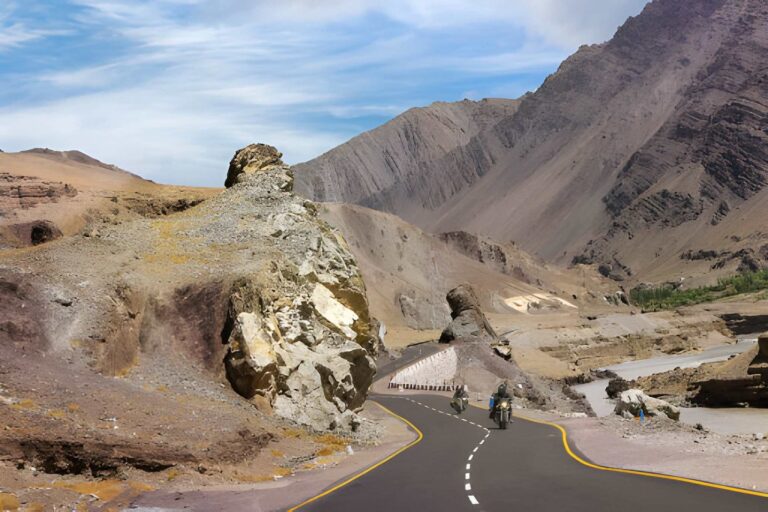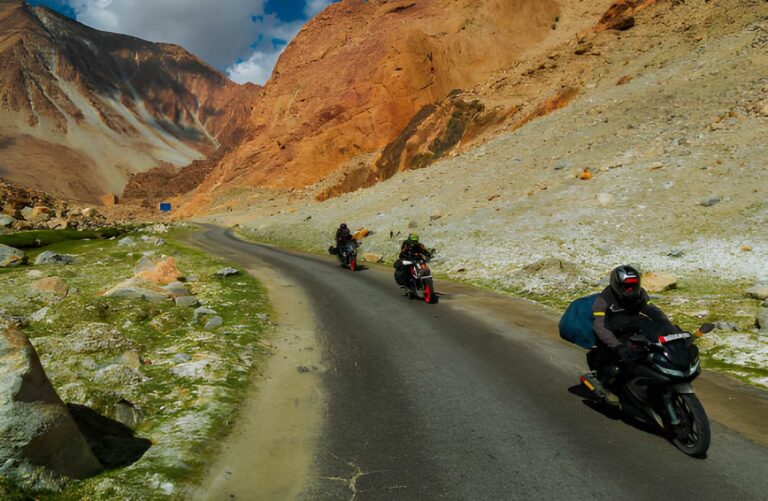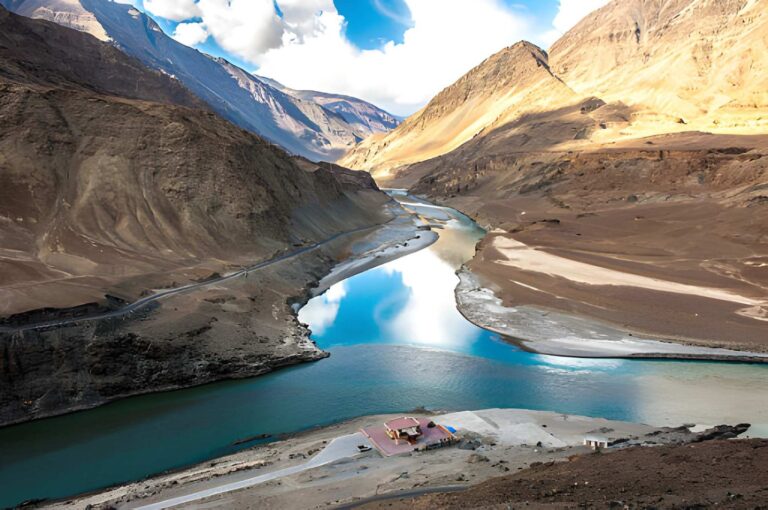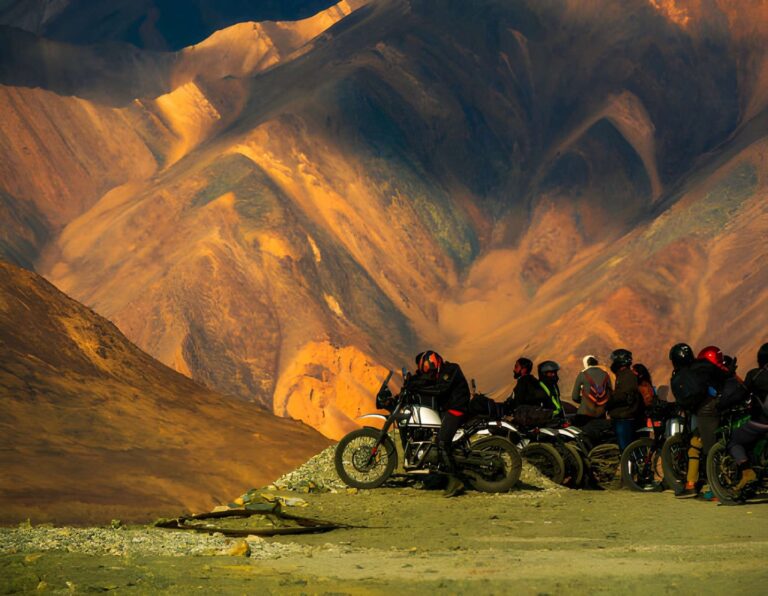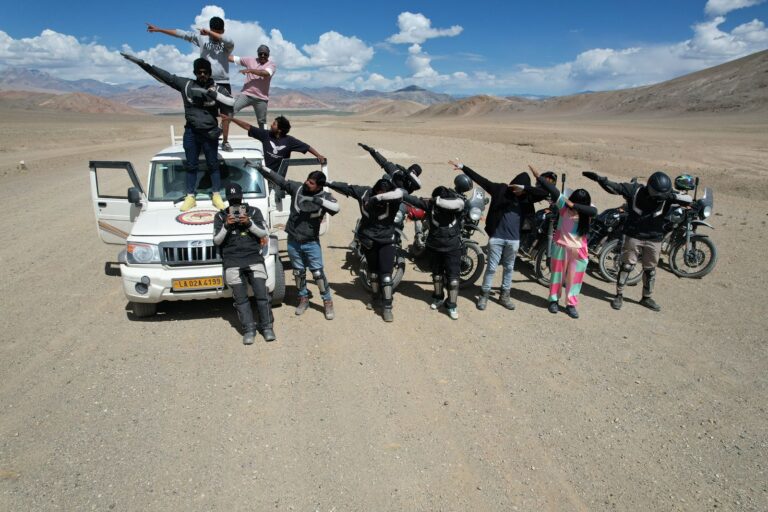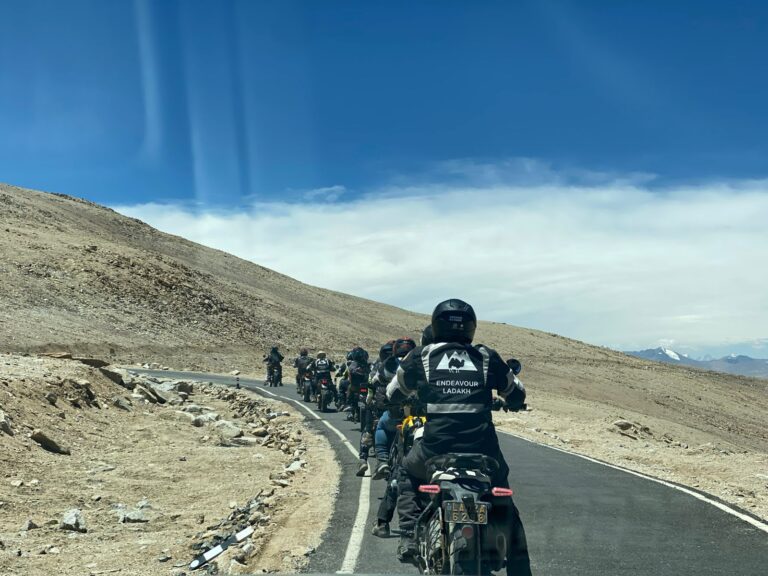
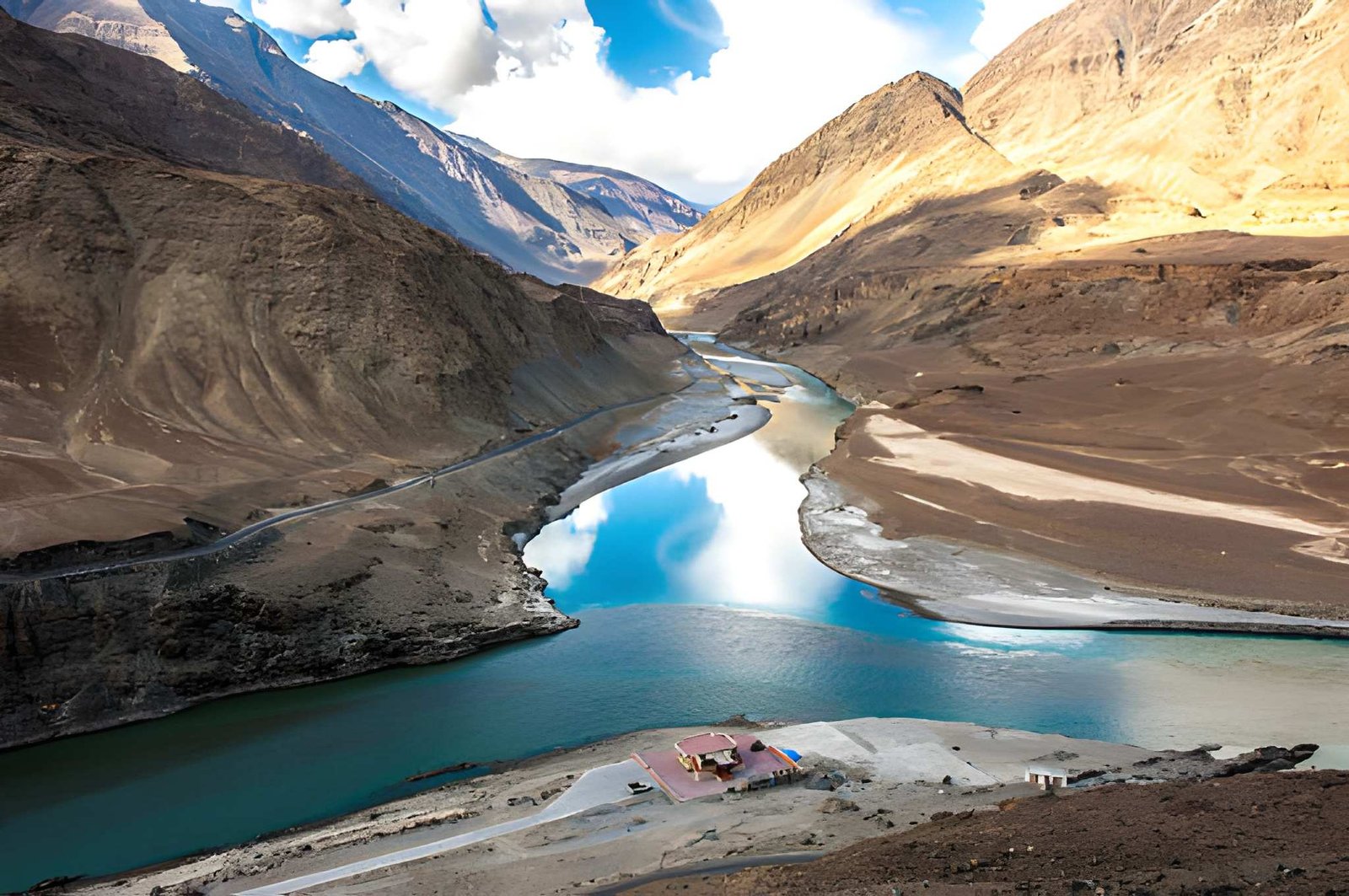
If you have already explored the popular Ladakh motorcycle routes and want to experience a quieter, more rugged side of the Himalayas, a Zanskar Bike Trip can be an exciting next adventure.
Zanskar is not simply another destination reached by motorcycle. The journey itself is a major part of the experience. The route takes riders through remote valleys, mountain roads, traditional villages, monasteries, river landscapes and some of the most dramatic terrain in the Trans-Himalayan region.
Compared with the classic Leh–Nubra–Pangong circuit, travelling through Zanskar generally requires more preparation. Road conditions can be demanding, connectivity may be limited, accommodation can be basic in remote areas, and weather can influence the route.
This guide explains what you should know before planning a Zanskar bike trip, including the route, itinerary, distance, estimated cost considerations, difficulty, terrain, fuel, accommodation, connectivity, motorcycle preparation, safety and the best time to travel.
Zanskar Bike Trip at a Glance
- Destination: Zanskar Valley, Ladakh
- Trip type: Motorcycle expedition
- Common starting point: Leh, depending on the selected itinerary
- Difficulty: Moderate to challenging
- Best suited for: Experienced riders and adventure travellers
- Terrain: Paved roads, gravel, rocky sections and rough mountain roads
- Accommodation: Hotels, guesthouses, homestays and camps, depending on the route
- Connectivity: Limited in remote sections
- Fuel: Limited in remote areas; advance planning is important
- Best season: Generally the warmer months when the selected route is accessible
- Highlights: Zanskar Valley, Padum, monasteries, remote villages, mountain passes and river landscapes
Important: Zanskar routes can change because of weather, road conditions, construction and local accessibility. Always confirm the current route and itinerary before departure.
What Makes a Zanskar Bike Trip Different?
Ladakh is well known for motorcycle routes such as Leh–Nubra–Pangong. Zanskar offers a different kind of experience.
Instead of focusing only on famous tourist attractions, a Zanskar motorcycle journey is about the combination of the road, landscape, villages and remoteness.
Depending on your route, you may ride through:
- Deep mountain valleys
- Remote settlements
- High mountain passes
- Rocky and gravel sections
- River valleys
- Monastery landscapes
- Narrow mountain roads
- Vast, sparsely populated landscapes
The feeling of isolation is one of Zanskar’s biggest attractions. You can spend long stretches of the journey away from the crowds and infrastructure found on more established Ladakh circuits.
Where Is Zanskar?
Zanskar is a remote mountainous region of Ladakh, surrounded by high Himalayan terrain.
Its geography and harsh winters historically made the region difficult to access. This relative isolation has helped preserve its distinctive landscapes, Buddhist heritage, villages and traditional way of life.
Road connectivity has improved over time, but Zanskar remains an adventure-oriented destination where road conditions and accessibility can vary considerably.
For motorcycle travellers, that combination of remoteness and challenging terrain is a major part of the appeal.
Why Take a Zanskar Bike Expedition?
A Zanskar bike expedition is particularly appealing to travellers who want to experience a less conventional side of Ladakh.
1. Remote Himalayan Landscapes
Zanskar offers huge valleys, towering mountains, dramatic rock formations and constantly changing landscapes.
The scenery becomes part of the journey rather than simply something to see at a particular sightseeing stop.
2. Fewer Crowds
Compared with some of Ladakh’s most popular destinations, several parts of the Zanskar region can feel considerably quieter.
This makes the journey attractive to riders looking for a more remote Himalayan experience.
3. Challenging Roads
Depending on the route and season, riders may encounter gravel, rocks, uneven surfaces, narrow roads and water crossings.
The changing terrain is one of the reasons Zanskar appeals to experienced adventure riders.
4. Traditional Villages and Local Culture
The journey can take you through remote settlements where traditional Himalayan lifestyles remain an important part of daily life.
5. Buddhist Heritage
Monasteries and Buddhist traditions are deeply connected with the cultural landscape of Zanskar.
Places such as Karsha, Stongde and Zangla can add a cultural dimension to the motorcycle journey, depending on the itinerary.
6. A Genuine Expedition Experience
Zanskar feels different from a conventional sightseeing holiday.
The route, weather, terrain and changing conditions all become part of the adventure.
Leh to Zanskar Bike Trip: What Is the Route Like?
A Leh to Zanskar Bike Trip can follow different routes depending on the season, road conditions and overall itinerary.
A broad route may include:
Leh → Lamayuru/Kargil region → Zanskar → Padum → Zanskar Valley → return towards Ladakh
The exact route should not be treated as fixed. Road construction, weather and local conditions can affect the most practical route for a particular departure.
This is one reason local route knowledge can be valuable when planning a motorcycle expedition in Zanskar.
Zanskar Bike Trip Itinerary
There is no single itinerary that works for every Zanskar expedition. The number of days depends on the route, road conditions, sightseeing plans and whether the journey begins and ends in Leh.
A longer itinerary generally gives riders more time for acclimatisation, exploration and unexpected road conditions.
Here is an example of how an expedition can be structured.
Day 1: Arrive in Leh – Acclimatisation
The first day should primarily be used to acclimatise.
Leh is located at high altitude, so immediately beginning a demanding motorcycle journey is not advisable.
Depending on how you feel, you can keep the day relaxed and explore places such as:
- Leh Palace
- Shanti Stupa
- Leh Market
- Local monasteries
Keep physical activity light and use the day to prepare for the journey ahead.
Why Is Acclimatisation Important?
The Zanskar route involves high-altitude terrain. Giving your body time to adjust can be an important part of responsible trip planning.
A good itinerary should therefore allow sufficient acclimatisation rather than focusing only on covering maximum kilometres.
Day 2: Leh to Lamayuru / Kargil Region
The expedition begins as you leave Leh and travel towards the western side of Ladakh.
Depending on the selected route, highlights can include:
- Gurudwara Pathar Sahib
- Magnetic Hill region
- Lamayuru
- Moonland landscapes
- Mountain valleys
As you move farther from Leh, the landscape gradually becomes more remote.
Day 3: Towards Zanskar
The journey continues towards the Zanskar region.
The surroundings become increasingly rugged, with possible sections of:
- Rocky mountain roads
- Narrow valleys
- River landscapes
- Remote settlements
- Long isolated stretches
Overnight accommodation may be arranged at a local guesthouse, homestay or another available property depending on the route.
Day 4: Entering the Zanskar Valley
This can be one of the most memorable sections of the journey.
As you move deeper into Zanskar, the mountains become increasingly dramatic and the valley opens into expansive Himalayan landscapes.
Here, the road itself becomes part of the experience.
Instead of travelling from one sightseeing point to another, you spend much of the day experiencing the changing terrain and landscape.
Day 5: Explore Zanskar and Padum
Padum is one of the major settlements in Zanskar and can serve as an important base for exploring the surrounding region.
Depending on the itinerary and local conditions, the day may include:
- Padum
- Local villages
- Monasteries
- Valley viewpoints
- Surrounding mountain landscapes
A flexible pace is useful in Zanskar because weather and road conditions can influence the day’s plans.
Day 6: Zanskar Exploration and Monastery Circuit
A dedicated exploration day provides an opportunity to experience the cultural side of the region.
Depending on the selected route, you may visit areas around:
- Karsha
- Stongde
- Zangla
- Other accessible settlements
The exact places included should always be confirmed in your itinerary.
Day 7: Begin the Return Journey
After exploring Zanskar, the expedition begins its return journey.
The same road can look completely different in reverse. Changing light, weather and perspective can reveal new details in the landscape.
After several consecutive riding days, fatigue can also become a factor, making the support system and pace of the expedition important.
Day 8: Return Towards Leh / Departure Region
The journey continues towards the designated return point.
Depending on the itinerary, another overnight stop may be required before reaching Leh or the final departure destination.
The actual number of days will depend on the route selected by your operator.
How Many Days Do You Need for a Zanskar Bike Trip?
There is no single ideal duration for every traveller.
A shorter itinerary may suit riders with limited time, but it can involve longer riding days and less flexibility.
A longer Zanskar motorcycle tour can provide more time for:
- Acclimatisation
- Exploration
- Rest
- Weather-related delays
- Mechanical contingencies
- Villages and monasteries
- Changes in road conditions
For a remote Himalayan journey, allowing additional time can make the experience more comfortable and flexible.
Zanskar Bike Trip Distance
The total distance of a Zanskar bike trip depends heavily on the selected route.
Rather than judging an itinerary only by kilometres, consider the type of road and the amount of riding time involved.
For example, 100 km on a smooth highway can be very different from 100 km of rocky mountain road at high altitude.
When comparing Zanskar bike trip packages, look at:
- Total riding distance
- Riding hours per day
- Road conditions
- High-altitude sections
- Rest days
- Buffer days
- Route flexibility
The distance printed on an itinerary tells only part of the story.
Zanskar Bike Trip Cost: What Affects the Price?
The cost of a Zanskar motorcycle expedition can vary considerably depending on the itinerary and inclusions.
Instead of comparing only the headline price, check exactly what the package includes.
Important cost factors can include:
- Motorcycle rental
- Number of riding days
- Accommodation category
- Meals
- Fuel
- Support vehicle
- Mechanic
- Spare parts or mechanical support
- Permits, where applicable
- Accommodation during remote sections
- Trip leader or riding support
- Emergency arrangements
A lower-priced package is not necessarily comparable with a package that includes a stronger support system.
Before booking Ladakh bike trip packages, ask the operator for a clear list of inclusions and exclusions.
What Is the Terrain Like in Zanskar?
Terrain is one of the most important things to understand before planning the journey.
Depending on the route and current road conditions, you may encounter:
Paved Roads
Some sections have improved road surfaces and can be relatively comfortable to ride.
Gravel
Loose gravel can reduce traction and requires controlled riding.
Rocky Sections
Uneven surfaces and larger stones can make the motorcycle physically demanding to handle.
Mud
Rain and snowmelt can make some sections muddy.
Water Crossings
Streams and water crossings may be encountered depending on the route and season.
Narrow Mountain Roads
Certain sections may be exposed or narrow and require additional concentration.
For this reason, a Zanskar expedition should be approached differently from a conventional road trip.
Are There River Crossings on a Zanskar Bike Trip?
Water crossings can occur depending on the route, season and current conditions.
Their difficulty can be influenced by:
- Snowmelt
- Rainfall
- Time of day
- Water level
- Road conditions
- Construction
- The selected route
Never assume that a crossing will have the same conditions on every day.
Before attempting a crossing, riders should consider the water depth, current, entry and exit points and the surface underneath.
If conditions are unsafe, waiting or taking an alternative route is preferable to taking unnecessary risks.
How Difficult Is a Zanskar Bike Trip?
A Zanskar motorcycle journey is generally more demanding than a conventional Ladakh sightseeing circuit.
The difficulty comes from several factors working together.
High Altitude
The route includes high-altitude terrain, making acclimatisation important.
Rough Roads
Road conditions can change significantly along the route.
Long Riding Days
Some sections can require several hours of riding.
Changing Weather
Mountain weather can change quickly and affect road conditions.
Remote Infrastructure
Fuel, accommodation and medical facilities are less readily available in remote sections.
Physical Fatigue
Several consecutive days of riding on rough roads can become tiring.
Overall, the difficulty can range from moderate to challenging, depending on the route, season and rider experience.
Who Should Consider a Zanskar Motorcycle Tour?
Zanskar can be suitable for travellers who:
- Have previous motorcycle riding experience
- Enjoy adventure travel
- Are comfortable with rough terrain
- Don’t mind basic accommodation
- Want to explore remote destinations
- Can adapt to changing weather and road conditions
- Prefer offbeat Himalayan routes
It may be less suitable if you expect:
- Smooth roads throughout the journey
- Luxury accommodation every night
- Constant mobile connectivity
- Short riding days
- A completely fixed itinerary
If this is your first high-altitude motorcycle trip, discuss your experience with the tour operator before selecting the route.
Best Time for a Zanskar Bike Trip
The best time for a Zanskar motorcycle journey depends on the specific route and current road accessibility.
In general, motorcycle travel is concentrated in the warmer months when high-altitude roads become accessible.
May to June
The season begins as winter conditions recede. Some areas may still experience snow or difficult road conditions.
July to August
These months can be popular for motorcycle expeditions, although weather and road conditions can still affect individual routes.
September
September can be attractive for experienced riders, with cooler conditions and potentially fewer travellers in some areas.
October Onwards
Temperatures become considerably colder and some high-altitude routes may become inaccessible.
Always confirm current road conditions before departure rather than relying only on a fixed seasonal calendar.
Zanskar Weather: What Should Riders Expect?
Mountain weather can be unpredictable.
During a single riding day, conditions can change from:
Sun → Clouds → Wind → Rain → Cold
Temperatures can also fall quickly after sunset and at higher elevations.
Pack for changing conditions even if the forecast looks favourable before departure.
A flexible itinerary is particularly useful because weather can affect road conditions and travel times.
Fuel Availability During a Zanskar Bike Trip
Fuel planning is particularly important when travelling through remote areas.
Before entering a longer remote section, riders should understand:
- Where the next reliable fuel source is
- The motorcycle’s practical fuel range
- Whether reserve fuel is being carried
- Whether the support vehicle carries additional fuel
- How much riding is planned before the next refuelling opportunity
Running out of fuel in a remote mountain region is very different from running out in a city or on a major highway.
For that reason, fuel planning should be part of the itinerary rather than something left until the last moment.
Mobile Network and Internet in Zanskar
Connectivity can be limited or unavailable across remote sections.
Do not plan your journey around having continuous:
- Mobile data
- Phone calls
- Internet access
- Online navigation
Before leaving a connected area:
- Inform your family about the planned route
- Download important information
- Save emergency contacts
- Carry a power bank
- Keep offline navigation information available
Limited connectivity is also part of what gives Zanskar its remote character.
Accommodation in Zanskar
Accommodation in Zanskar is generally simpler than what travellers may find in Leh.
Depending on the route, you may stay in:
- Hotels
- Guesthouses
- Homestays
- Camps
- Local lodges
Facilities can vary significantly between locations.
You may encounter basic rooms, limited hot water, simple bathrooms, limited heating or inconsistent connectivity.
When booking a package, ask exactly what type of accommodation is planned for each night rather than assuming the same standard throughout the journey.
Food During a Zanskar Bike Expedition
Food choices can become more limited as you travel deeper into remote areas.
Meals may include:
- Dal
- Rice
- Roti
- Vegetables
- Noodles
- Thukpa
- Momos
- Eggs
- Local preparations
It is also sensible to carry personal snacks for long riding days.
Useful options include:
- Dry fruits
- Energy bars
- Chocolates
- Electrolytes
- Biscuits
Staying hydrated is particularly important during high-altitude travel.
How to Prepare Your Motorcycle for Zanskar
Your motorcycle should be in good mechanical condition before starting the expedition.
Before departure, check:
- Engine oil
- Brake pads
- Tyres
- Chain and sprockets
- Clutch
- Battery
- Electrical system
- Suspension
- Lights
- Cooling system
- Puncture-repair readiness
Tyres
Good-quality tyres with sufficient tread are particularly important on gravel and rough surfaces.
Luggage
Keep luggage as compact as possible.
Excessive weight can affect:
- Balance
- Braking
- Handling
- Fuel consumption
On rough terrain, unnecessary luggage can make the motorcycle more difficult to control.
What Motorcycle Is Best for Zanskar?
The most powerful motorcycle is not automatically the best motorcycle for Zanskar.
For this type of journey, reliability, condition and ease of handling can be more important than outright engine power.
Look for a motorcycle that is:
- Reliable
- Comfortable
- Mechanically sound
- Suitable for mixed terrain
- Easy for you to handle
- Properly maintained
If you are renting a motorcycle, ask the operator which motorcycle you will actually receive and what mechanical support is available in case of a breakdown.
What to Pack for a Zanskar Bike Expedition
Motorcycle Riding Gear
- Certified helmet
- Riding jacket
- Riding pants
- Riding gloves
- Riding boots
- Protective armour
Cold-Weather Clothing
- Thermal layers
- Fleece
- Insulated jacket
- Waterproof layer
- Woollen socks
- Warm cap
- Neck warmer
Personal Essentials
- Sunglasses
- Sunscreen
- Lip balm
- Personal medication
- Water bottle
- Power bank
- Headlamp
- Basic toiletries
Useful Extras
- Dry bags
- Small daypack
- Energy snacks
- Offline maps
- Basic personal first-aid supplies
Pack according to the season and the exact itinerary rather than carrying unnecessary weight.
Altitude and Acclimatisation in Zanskar
Altitude deserves serious attention on any high-altitude Himalayan motorcycle journey.
Possible symptoms of altitude-related illness can include:
- Headache
- Nausea
- Dizziness
- Fatigue
- Loss of appetite
- Shortness of breath
More serious symptoms require prompt medical attention and appropriate descent.
Even physically fit travellers can experience altitude-related problems.
Basic precautions include:
- Allowing adequate time for acclimatisation
- Staying hydrated
- Avoiding excessive physical exertion
- Avoiding alcohol during acclimatisation
- Communicating symptoms early
- Following the guidance of your trip leader
- Descending if serious symptoms develop
If you have any medical concerns before travelling at high altitude, discuss them with a qualified healthcare professional before the trip.
Medical and Emergency Support on a Zanskar Bike Trip
Because Zanskar is remote, it is worth understanding the emergency arrangements before booking.
Ask your tour operator:
- Is a first-aid kit available?
- Is a support vehicle included?
- Is a mechanic travelling with the group?
- Who handles emergencies?
- What is the emergency evacuation procedure?
- Where is the nearest medical facility along the route?
- Is a trip leader accompanying the group?
A professional operator should be able to explain its support and emergency procedures clearly.
Why Local Expertise Matters in Zanskar
A route may look straightforward on a map but conditions on the ground can be very different.
Local knowledge can help with:
- Current road conditions
- Weather-related changes
- Water crossings
- Fuel planning
- Accommodation
- Route alternatives
- Local logistics
- Motorcycle support
- Emergency arrangements
This is one reason many travellers prefer working with an experienced Leh Ladakh Tour Operator when planning a remote motorcycle expedition.
Why Consider Endeavour Ladakh for a Zanskar Bike Trip?
When comparing Zanskar bike trip packages, price is only one part of the decision.
The support system behind the journey can be equally important, particularly when travelling through remote terrain.
Endeavour Ladakh is a Ladakh-based travel company offering Ladakh travel experiences and motorcycle expeditions.
For a Zanskar journey, the important areas to discuss with the team include:
Local Route Knowledge
A local team can help plan the journey around current road conditions, accessibility and regional logistics.
Expedition Planning
A Zanskar itinerary needs to consider:
- Acclimatisation
- Riding distance
- Weather
- Road conditions
- Fuel
- Accommodation
- Backup arrangements
Motorcycle Support
A properly maintained motorcycle and access to mechanical assistance can be important when travelling through remote terrain.
Backup Assistance
A support vehicle and contingency arrangements can provide additional assistance when unexpected mechanical or road-related issues occur.
Local Logistics
Accommodation, meals, route coordination and other arrangements can be managed as part of the overall expedition plan.
Clear Package Information
Before booking, ask for a clear breakdown of:
- Exact itinerary
- Motorcycle
- Accommodation
- Meals
- Fuel
- Permits, where applicable
- Support vehicle
- Mechanic
- Inclusions
- Exclusions
This makes it easier to compare packages based on what is actually included rather than simply comparing prices.
What Should You Compare in Zanskar Bike Trip Packages?
If you are comparing different packages, ask these questions before booking.
1. What Is the Exact Itinerary?
Check how much time is actually spent in Zanskar and how long the daily riding stages are.
2. Which Motorcycle Is Included?
Ask for the exact motorcycle model and understand the replacement policy in case of a mechanical problem.
3. Is Fuel Included?
Clarify which fuel costs are included and how refuelling is handled in remote sections.
4. What Accommodation Is Included?
Ask about the accommodation category for each night.
5. Which Meals Are Included?
Check whether breakfast, lunch, dinner or other meals are part of the package.
6. Is a Mechanic Available?
Mechanical support can be particularly important on rough and remote routes.
7. Is a Support Vehicle Included?
Ask whether a backup vehicle accompanies the group and what assistance it provides.
8. Are Applicable Permits Included?
Confirm which permissions or documentation are included in the package.
9. What Happens in an Emergency?
Understand the operator’s emergency and evacuation arrangements.
10. What Happens if the Route Changes?
Ask how the operator handles road closures, weather disruptions and inaccessible sections.
The most suitable package for you depends on the balance between itinerary, support, inclusions, riding experience and budget.
Zanskar Bike Trip vs Classic Leh Bike Trip
Zanskar and the classic Ladakh circuit offer different types of motorcycle experiences.
Classic Ladakh Circuit
- More established tourist routes
- Popular destinations such as Nubra and Pangong
- More accommodation options
- Better connectivity in many areas
- More predictable infrastructure
- Suitable for travellers looking for iconic Ladakh highlights
Zanskar Bike Expedition
- More remote terrain
- Zanskar-focused itinerary
- More basic accommodation in some areas
- Limited connectivity in remote sections
- Rougher road conditions on some routes
- More expedition-oriented experience
If you are visiting Ladakh for the first time and primarily want the iconic destinations, a classic circuit may suit your travel goals.
If your priority is a more remote motorcycle adventure and you are comfortable with challenging terrain, Zanskar offers a different experience.
Zanskar vs Umling La: How Are They Different?
Zanskar and Umling La can both be challenging, but the nature of the challenge is different.
Zanskar
The difficulty can come from:
- Rough terrain
- Remote roads
- Water crossings
- Long riding sections
- Limited infrastructure
Umling La
The challenge is more closely associated with:
- Extreme altitude
- Thin air
- Cold conditions
- High-altitude riding
- Remote eastern Ladakh
So, the two routes should not be judged only by which one is “harder”. They present different types of riding challenges.
Common Mistakes to Avoid on a Zanskar Motorcycle Tour
1. Treating Zanskar Like a Highway Road Trip
The terrain requires patience and controlled riding.
2. Underestimating Water Crossings
Conditions can change quickly, particularly with snowmelt and weather.
3. Carrying Too Much Luggage
Heavy motorcycles can be more difficult to control on rough terrain.
4. Ignoring Fuel Planning
Remote sections may have limited refuelling options.
5. Assuming Mobile Networks Will Work
Connectivity can be unavailable across large sections.
6. Rushing the Itinerary
Covering more kilometres is not necessarily the same as having a better expedition.
7. Ignoring Weather
Mountain weather can affect both road conditions and travel time.
8. Choosing a Package Only by Price
A package with better mechanical, logistical and emergency support may offer a different overall experience than a basic package.
Is Zanskar Safe for Motorcycle Travel?
Zanskar can be travelled by motorcycle with appropriate preparation, suitable equipment and responsible route planning.
However, it should be approached as an adventure expedition rather than an ordinary road holiday.
Travel conditions can depend on:
- Weather
- Road conditions
- Rider experience
- Motorcycle condition
- Acclimatisation
- Route planning
- Local guidance
- Emergency preparedness
The key is flexibility.
If road or weather conditions become unsuitable, changing the route or stopping for the day is preferable to trying to maintain a fixed schedule.
Final Thoughts: Is a Zanskar Bike Trip Right for You?
A Zanskar Bike Trip is about much more than reaching a destination.
It is about the changing landscape, remote villages, monasteries, mountain roads, river valleys and the experience of travelling through a region where infrastructure becomes increasingly limited.
It also demands more preparation than a conventional Ladakh holiday.
Before booking, consider your riding experience, the route, number of riding days, accommodation, motorcycle, fuel arrangements, support vehicle, mechanical assistance and emergency plan.
If you are looking for an adventure that goes beyond the classic Ladakh circuit, Zanskar can offer a very different way to experience the Himalayas.
Plan Your Zanskar Bike Expedition with Endeavour Ladakh
Planning a remote motorcycle journey is easier when you know what to expect before you leave.
If you are exploring Zanskar bike trip packages, discuss the route, motorcycle, accommodation, support arrangements, inclusions and current road conditions with your tour operator before confirming your journey.
Endeavour Ladakh can help you plan a Zanskar motorcycle expedition around the route and travel conditions for your chosen departure.
Ready to explore Zanskar by motorcycle? Contact Endeavour Ladakh to discuss available routes, expedition dates and package details.
Frequently Asked Questions About Zanskar Bike Trips
What is the best time for a Zanskar bike trip?
The motorcycle season generally falls during the warmer months when the selected high-altitude routes are accessible. Exact accessibility varies according to weather, road conditions and the route.
How difficult is a Zanskar bike trip?
It can range from moderate to challenging depending on the route, season, altitude, road conditions and rider experience.
How many days are required for a Zanskar bike expedition?
The duration depends on the route and itinerary. Longer journeys can provide more time for acclimatisation, exploration, rest and weather-related flexibility.
Can beginners do a Zanskar motorcycle tour?
Riders with limited high-altitude or rough-terrain experience should discuss their experience with the operator before booking. Zanskar is generally better suited to riders who are comfortable handling challenging road conditions.
Is fuel available throughout Zanskar?
Fuel availability is limited in remote areas. Riders should understand the refuelling plan and motorcycle range before entering longer remote sections.
Will mobile networks work in Zanskar?
Connectivity can be limited or unavailable across remote sections. Travellers should not depend on continuous mobile or internet access.
What bike is best for Zanskar?
A reliable motorcycle suitable for mixed and rough terrain is generally more important than choosing the most powerful motorcycle. Mechanical condition and rider familiarity also matter.
Are there river crossings on the Zanskar route?
Water crossings may occur depending on the season, route and current conditions. Their difficulty can change with snowmelt, rainfall and water levels.
Is accommodation available in Zanskar?
Yes. Depending on the route, travellers may stay in hotels, guesthouses, homestays, camps or local lodges. Facilities can be more basic than in Leh.
Should I choose a Zanskar bike trip or Leh–Nubra–Pangong?
The two routes offer different experiences. Leh–Nubra–Pangong is more established and focuses on some of Ladakh’s iconic destinations, while Zanskar offers a more remote and expedition-oriented motorcycle journey.
Why should I choose a local operator for Zanskar?
A local operator can assist with route planning, road-condition updates, fuel planning, accommodation, motorcycle support and local logistics. These factors can be particularly useful on remote routes.