
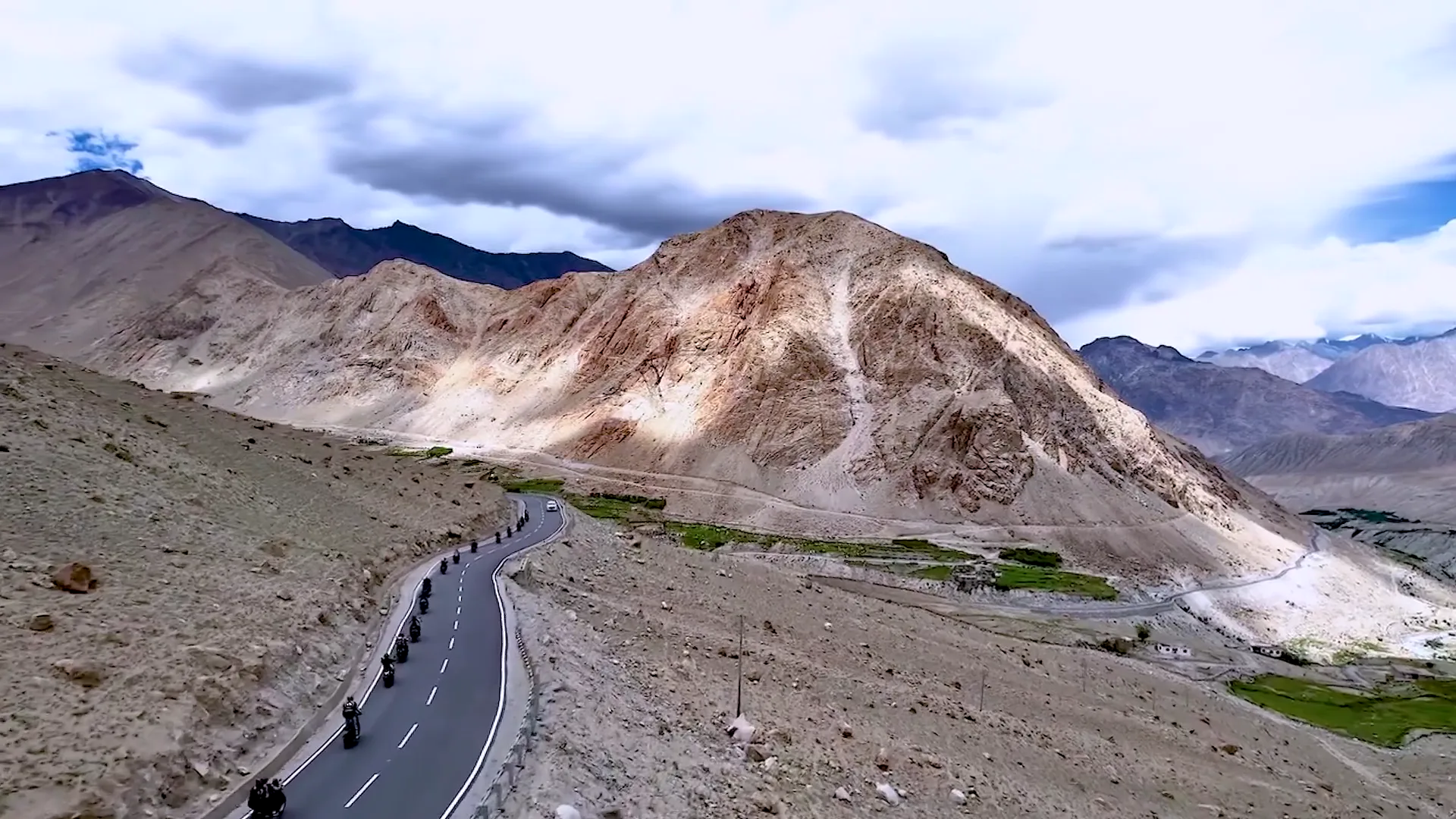
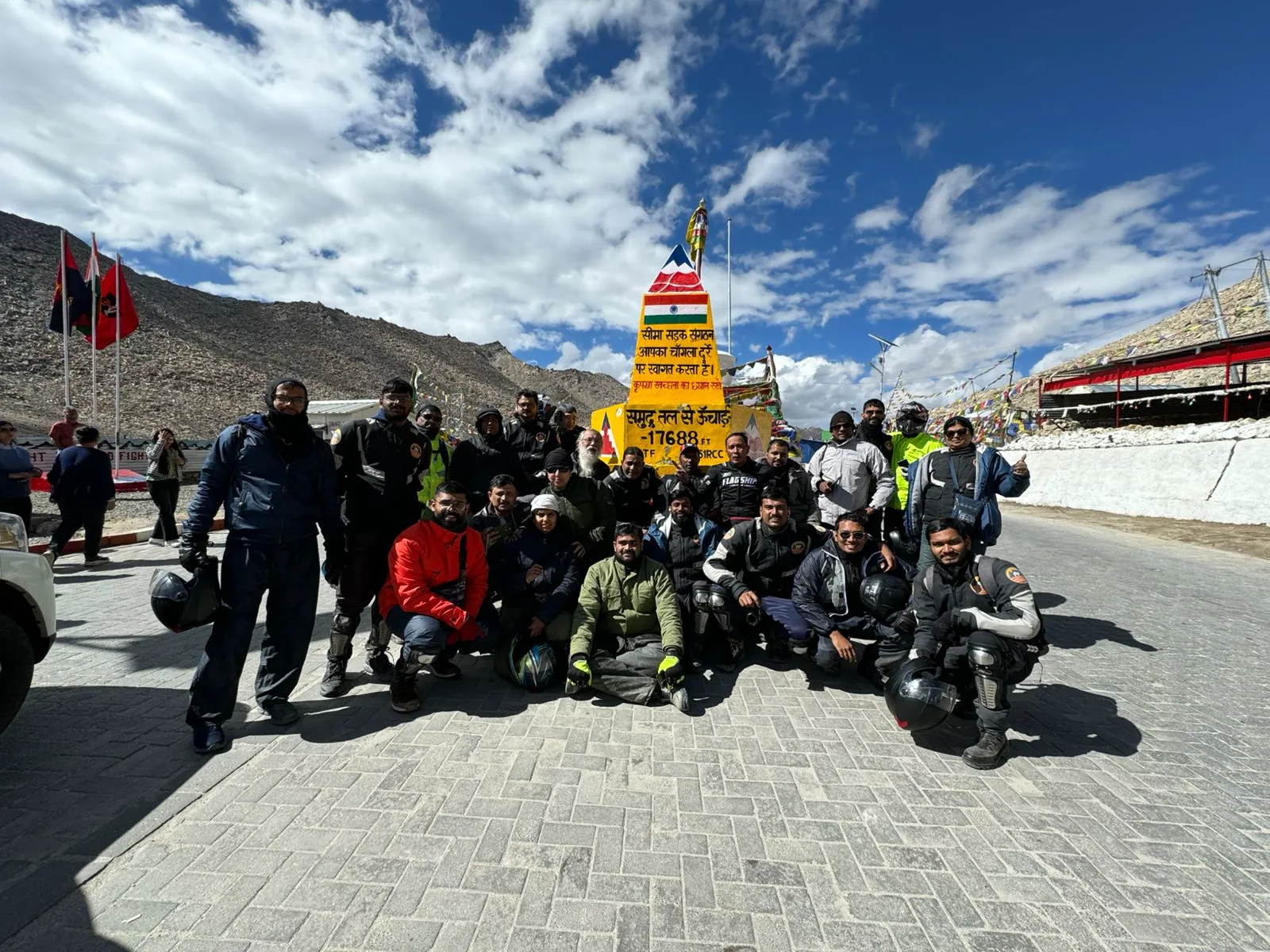
The roads are not the hardest part of a Ladakh bike trip. The altitude is. Leh sits at about 11,500 ft, Khardung La at 17,582 ft, and if you fly in from the plains your body gets no time to adjust. Altitude sickness can affect fit, young riders as much as anyone else, but most of it is avoidable if you go up slowly and listen to your body. This guide explains how to acclimatise, what to watch for and how our tours are planned around it. For every route in one place, see our Himalayan motorcycle tours page.
This is general travel advice, not medical advice. If you have a heart, lung or blood-pressure condition, are pregnant, or take regular medication, speak to your doctor before you book.
What is altitude sickness?
Above about 8,000 ft the air holds less oxygen, and your body needs a few days to adapt. Acute Mountain Sickness (AMS) is the common, mild form: headache, nausea, loss of appetite, tiredness, dizziness and poor sleep, usually in the first day or two after you arrive. It normally settles with rest if you do not go higher.
The rare serious forms are fluid on the lungs (HAPE) and swelling of the brain (HACE). Breathlessness at rest, a wet cough, confusion, loss of balance or unusual drowsiness are emergencies. The answer is oxygen and going down to a lower altitude straight away.
Why riders are at risk
- Fast ascent: a flight from Delhi to Leh takes you from near sea level to about 11,500 ft in roughly an hour.
- Effort: riding a loaded motorcycle on broken roads is physical work, and the cold dry air on the passes makes you lose water quickly.
- The big passes: Khardung La and Chang La are both above 17,500 ft, and Umling La is 19,024 ft.
- Pushing on: riders often ignore a headache to keep up with the group. Do not.
How to acclimatise in Leh
The most important step is simple: rest 12–48 hours in Leh before riding to higher passes. Every one of our Leh-start tours begins with a rest and acclimatisation day.
- Rest 12–48 hours in Leh before riding to higher passes: check in, have tea, and rest. No riding, no steep climbs, no heavy lifting. On our tours, the evening orientation covers the safety briefing and AMS precautions.
- Day 2, light activity: on our 6N/7D and longer Leh-start tours, day 2 is easy local sightseeing and a short check ride, so your body adjusts before the first big pass.
- Drink water steadily through the day, eat light meals, and avoid alcohol and smoking for the first days.
- Sleep well and keep warm. Leh nights are cold even in summer.
If you can, arrive a day early so you can rest closer to 48 hours in Leh. It costs one extra night in Leh and makes the first pass much easier.
On the road: climb high, sleep low
The rule mountaineers use works for riders too. It is fine to ride over a high pass during the day as long as you sleep lower that night. On our Leh loops you cross Khardung La and drop into the Nubra Valley to sleep, which is lower than the pass. Do not linger at the top: take your photos and ride on.
- Keep drinking water at every stop, even when you do not feel thirsty.
- Ride at a steady pace and keep your effort low on steep climbs.
- Eat at every stop. Riders often lose their appetite at altitude, which makes tiredness worse.
- Tell your road captain early about a headache, nausea or breathlessness. Never go higher while symptoms are getting worse.
Warning signs and what to do
| Symptoms | What it may be | What to do |
|---|---|---|
| Mild headache, poor appetite, tiredness, poor sleep | Mild AMS | Rest, drink water, do not go higher until it settles. Tell your road captain. |
| Headache that gets worse, vomiting, dizziness | Worsening AMS | Stop climbing. Use oxygen if advised and go down to a lower altitude. |
| Breathless at rest, wet cough, confusion, loss of balance | HAPE or HACE (emergency) | Oxygen and immediate descent. Get medical help. |
What about Diamox?
Acetazolamide (Diamox) is a prescription medicine that some travellers use to help prevent AMS. It is not right for everyone and has side effects and contraindications, including some drug allergies. Ask your own doctor whether it suits you before the trip. Do not take medicine on a forum’s advice.
How our tours are planned around altitude
- Rest first: our Leh-start tours begin with a rest and acclimatisation day, and the longer ones add a sightseeing day and check ride before the first big pass.
- Oxygen and first aid: every bike tour lists an oxygen cylinder for high-altitude regions and a fully stocked first aid kit in its inclusions.
- Support vehicle: a rider who is unwell can rest in the backup vehicle while the bike is looked after.
- Road captain and mechanic: every group rides with a road captain and mechanic who know these roads well.
- Pulse oximeter: our tours carry a pulse oximeter, a small finger clip that measures your blood-oxygen level, so the road captain can check how you are coping with the altitude.
Which tour is easiest on the body?
- Leh to Leh via Turtuk, 6N/7D, from ₹18,000: a rest day and a sightseeing and check-ride day in Leh before Khardung La.
- Leh to Leh, 5N/6D, from ₹15,000: a rest day in Leh, then Khardung La on day 2. Better for riders who have been to altitude before.
- Umling La & Tso Moriri, 8N/9D, from ₹25,000: a rest day and a check-ride day before the long climb to Tso Moriri, Hanle and Umling La (19,024 ft).
- The road crossings from Manali or Srinagar climb more gradually than a flight to Leh. Compare them on our Leh Ladakh bike trip page.
Prices are the published 2027 “from” prices (own bike, own fuel), per person, excluding GST (5%). Travelling from abroad? Read Is Ladakh safe for foreign tourists? and our Ladakh tours for foreigners page.
Common questions
Can I ride on my first day in Leh?
We do not recommend it. Rest 12–48 hours in Leh before riding to higher passes, keep the next day light if you can, and only then ride to the high passes.
I am fit. Do I still need to acclimatise?
Yes. Fitness does not protect you from altitude sickness. Everyone needs time to adjust.
Is it safe to sleep at Pangong?
Pangong is higher than Leh, which is why our loops visit it after you have spent nights in Leh and Nubra. If you feel unwell, tell your road captain before the night there.
What if I feel unwell during the tour?
Tell your road captain early. You can rest in the support vehicle, use the oxygen cylinder if advised, and the team will help you get to a lower altitude or medical help if needed.
The short answer
Rest 12–48 hours in Leh before riding to higher passes, go up slowly, drink plenty of water, skip alcohol, sleep lower than the passes and speak up early if you feel unwell. Our Leh-start tours are planned around exactly that. Compare every route on Himalayan motorcycle tours, or message our Leh team if you have a health question before you book.